GlobalTip Conference successful accomplished
Over 80 participants joint the conference at exceptional temperatures in Frankfurt/Main reaching 40°C on its final day. Nevertheless the lecture hall of the Arthur-von-Weinberg House was still pleasantly temperate. Prof. Dr. Klement Tockner, Director General of the Senckenberg Society for Nature Research, the host of the conference, welcomed the participants acknowledging the importance of the conference topic. The conference brought together project partners from Germany and the study area partner-countries, as well as three experts from around the globe, Prof. Dr. Rashid Sumaila (U British Colombia) , Prof. Dr. Pablo Marquet (U Católica de Chile) and Prof. Dr. Peter Roopnarine (California Academy of Science), who had accompanied the programme as evaluators since the first outlines of the projects.
Dr. Riikka Paloniemi from the Finnish Environmental Institute (SYKE, Director Societal Change Unit) gave a KeyNote presentation on “Social tipping points, ecological resilience and sustainabilty transformation in natural resource governance”. She highlighted the open doors of oppurtunities and stressed on the fact, that there is no need to always fulfill all requirements at once. She proposed to start with two-thirds.
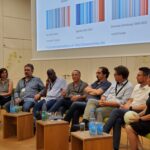
Interdisciplinary lectures to four topics were presented and discussed in lively discussion panels integrating the audience, chaired by the experts. Two pitches were held to the topic of challenges concerning detection of regime shifts/tipping points and were discussed among the coordinators and presenters. The final conclusions to the conference where: The tipping points are not a concept, they are real. Economy, society and climate change must be considered jointly. Just looking at one of these key drivers will greatly underestimate the danger of possible future tipping points of ecosystems.
The projects are continuing their work mostly until the end of 2025, some exceptions will end during the first half of 2026.
Topic : Social behavior and natural resources dynamics
Topic: Key drivers of tipping points
Topic: Social resilience to tipping points
Topic: Transition towards more stable socio-ecological systems